No products in the cart.

Only this weekend
Super Discount
Items on sale this week
Top picks this week. Up to 50% off the best selling products.

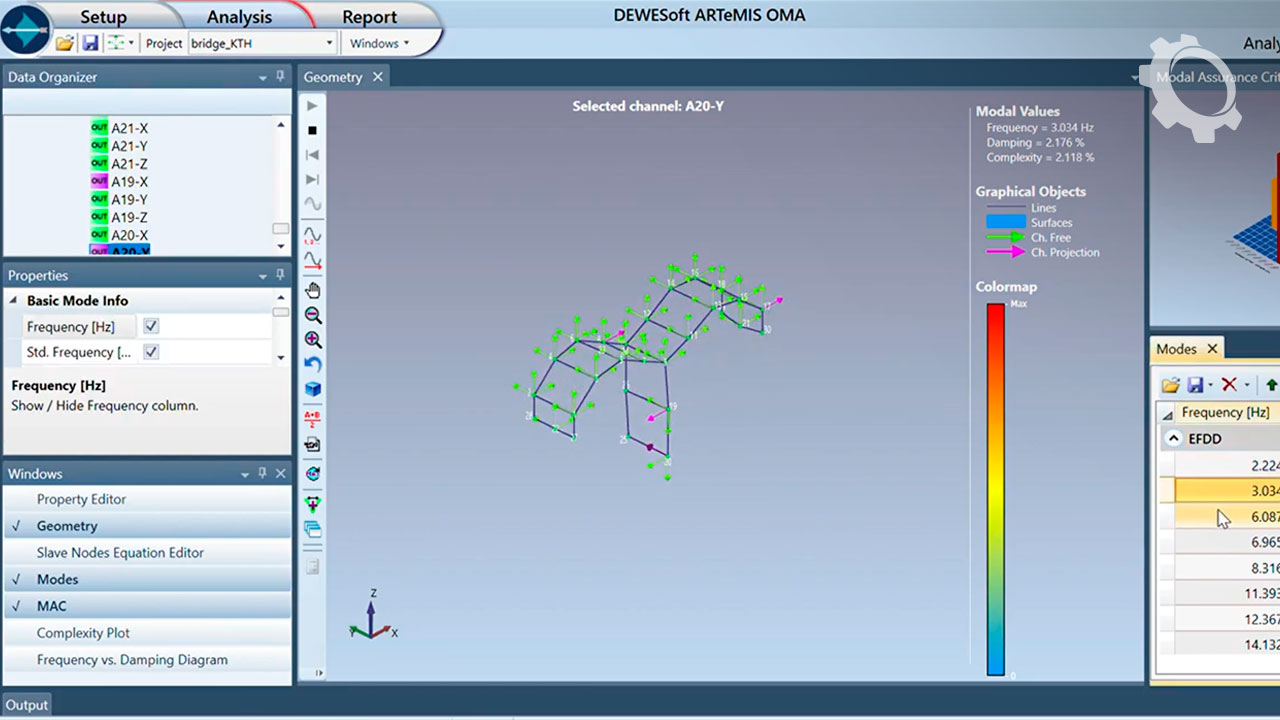
🔸 This is actual program, full version. After purchasing you will receive installation file + license file (patch) for lifetime activation.
🔸 Please, if you are can not follow our instruction and not okay with this kind of activation then do not buy this product.
🔸 This particular version can not be updated❗
🔸 We are not selling any activation codes, serials or subscriptions❗
🔸 Download FIle Size: 545MB
🔸 Program available only for Windows OS
Operational Modal Analysis (OMA) is a technique that focuses on analyzing the dynamic behavior of structures under operational conditions. Unlike traditional modal analysis that requires controlled excitation, it utilizes naturally occurring loads such as wind, waves, and machine operation. The software excels in this domain, enabling the estimation of vital modal parameters solely from measured output response data.
It stands out by exclusively utilizing measured output response signals, eliminating the need for input excitation signals. This software is particularly beneficial for structures subjected to complex and uncontrollable loads, like offshore platforms facing waves or buildings enduring wind forces. This tool can accurately estimate modal parameters such as mode shapes, natural frequencies, and damping ratios.
The versatility of the software is evident through its support for an extensive array of advanced monitoring and analysis tools during data acquisition. This capability allows for multi-physics investigations, aiding in predictive maintenance scheduling and the early detection of critical events.
One of the standout features of the software is its user-friendly workflow. Time data files obtained with Dewesoft (DXD files) can be seamlessly imported into the application for analysis. Furthermore, geometries from Dewesoft can be effortlessly integrated via UNV files, streamlining the process.
It’s essential to distinguish between Operational Modal Analysis (OMA) and Operating Deflection Shapes (ODS). While ODS provides deflection shapes, it goes a step further by enabling the estimation of modal models from operational data. This distinction makes it a more comprehensive and powerful technique.
It goes by various names, such as output-only modal analysis, ambient response analysis, ambient modal analysis, in-operation modal analysis, and natural input modal analysis. These terms highlight the technique’s focus on extracting valuable insights from operational data.
Only logged in customers who have purchased this product may leave a review.






Reviews
There are no reviews yet.